
Lui’s Lowdown on the Stock Market: A $40 Trillion can to kick down the road…
By John Lui - Managing Director and Chief Investment Strategist
US national debt usually expands to support the economy during bad times: recessions, World Wars, financial crises and global pandemics, and then declines as this fiscal support is no longer needed…but this is not the case now as deficit spending continues, causing the national debt to grow faster than the economy in good times…as a result the national debt just reached $40 Trillion…
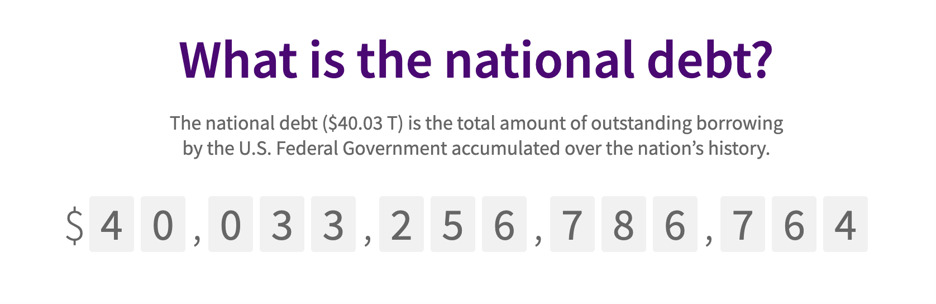
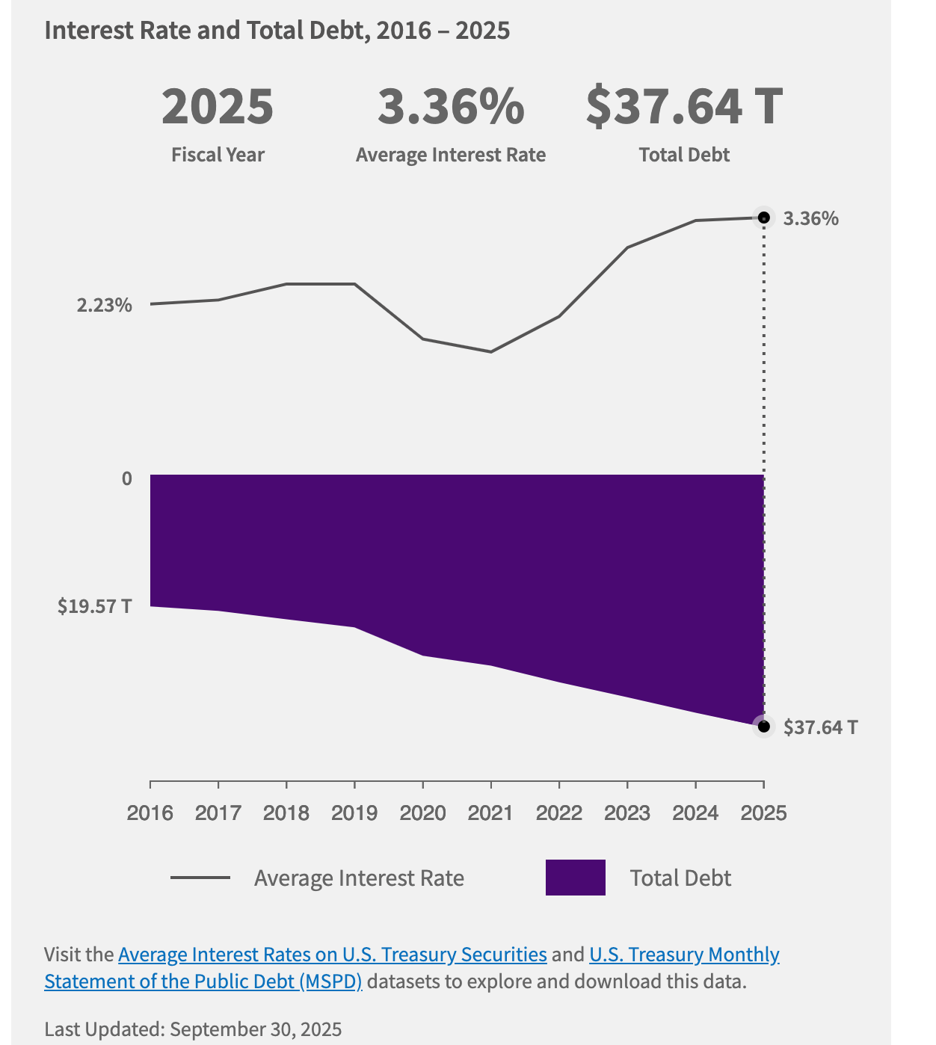
Over the last 10 years the national debt grew by $20 trillion, doubling under Trump and Biden…
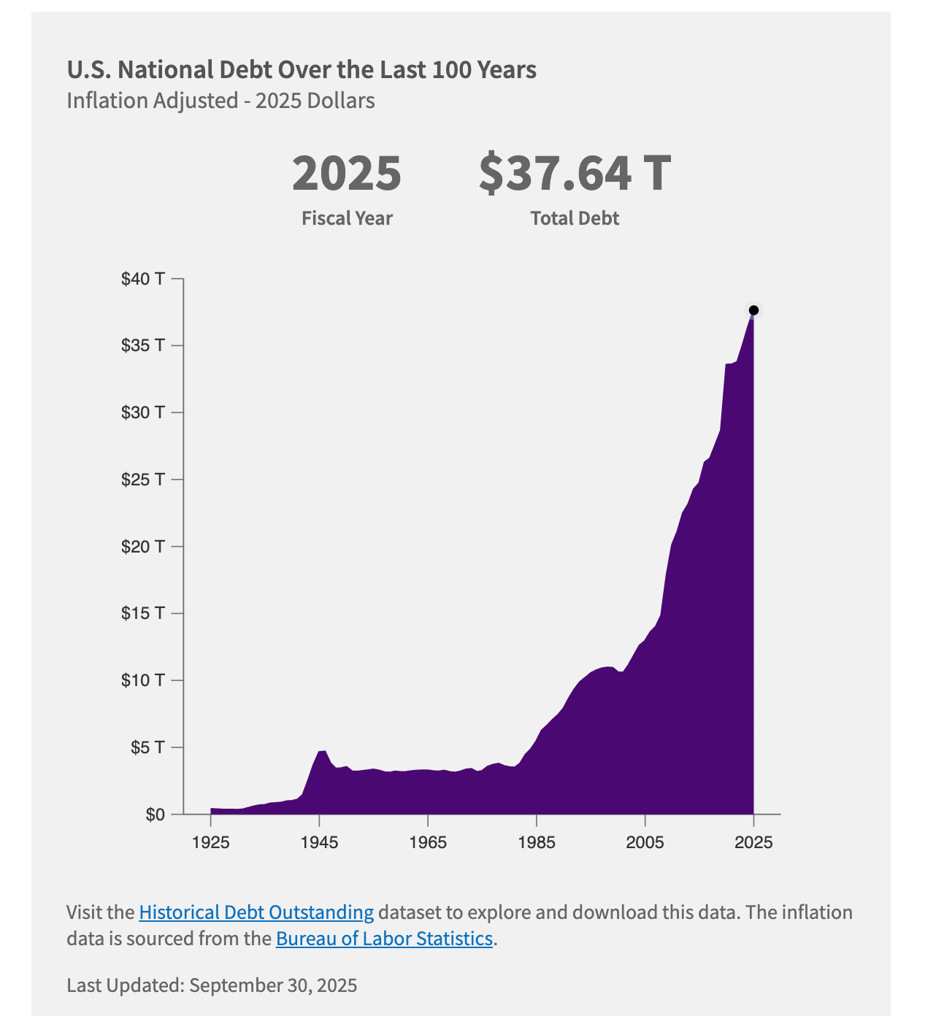
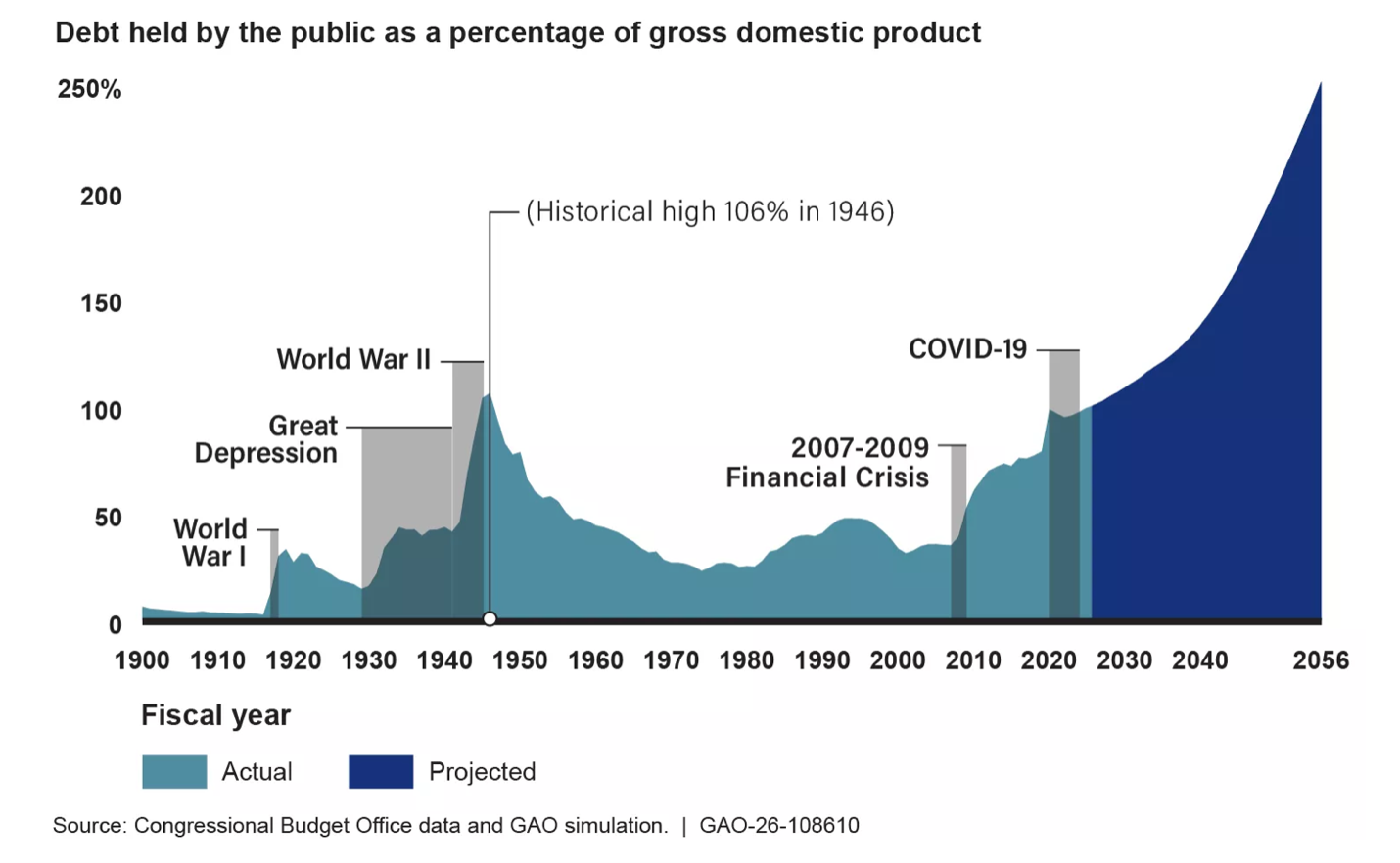
US debt as a percentage of GDP has not declined after the Great Financial Crisis and COVID, but has instead risen to 124% of GDP…this contrasts with the rapid decline after World War II to a low of 30% of GDP in 1980…
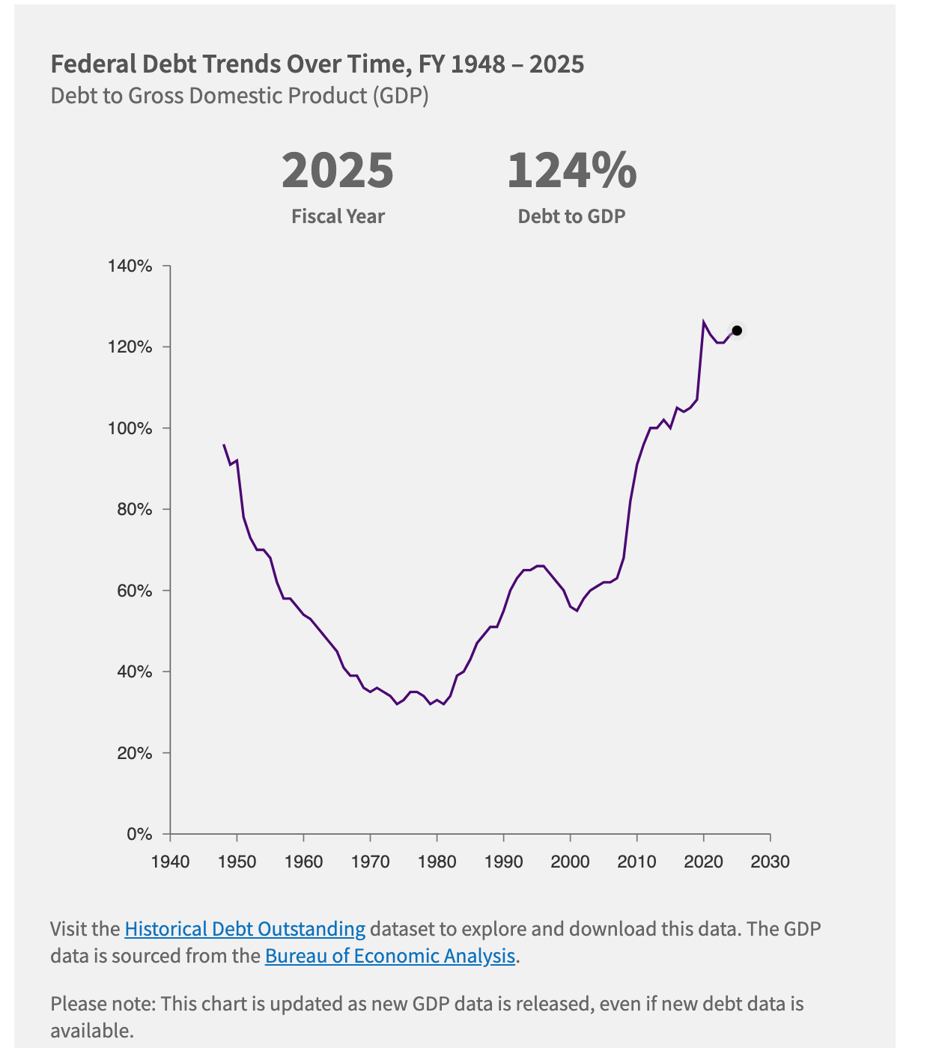
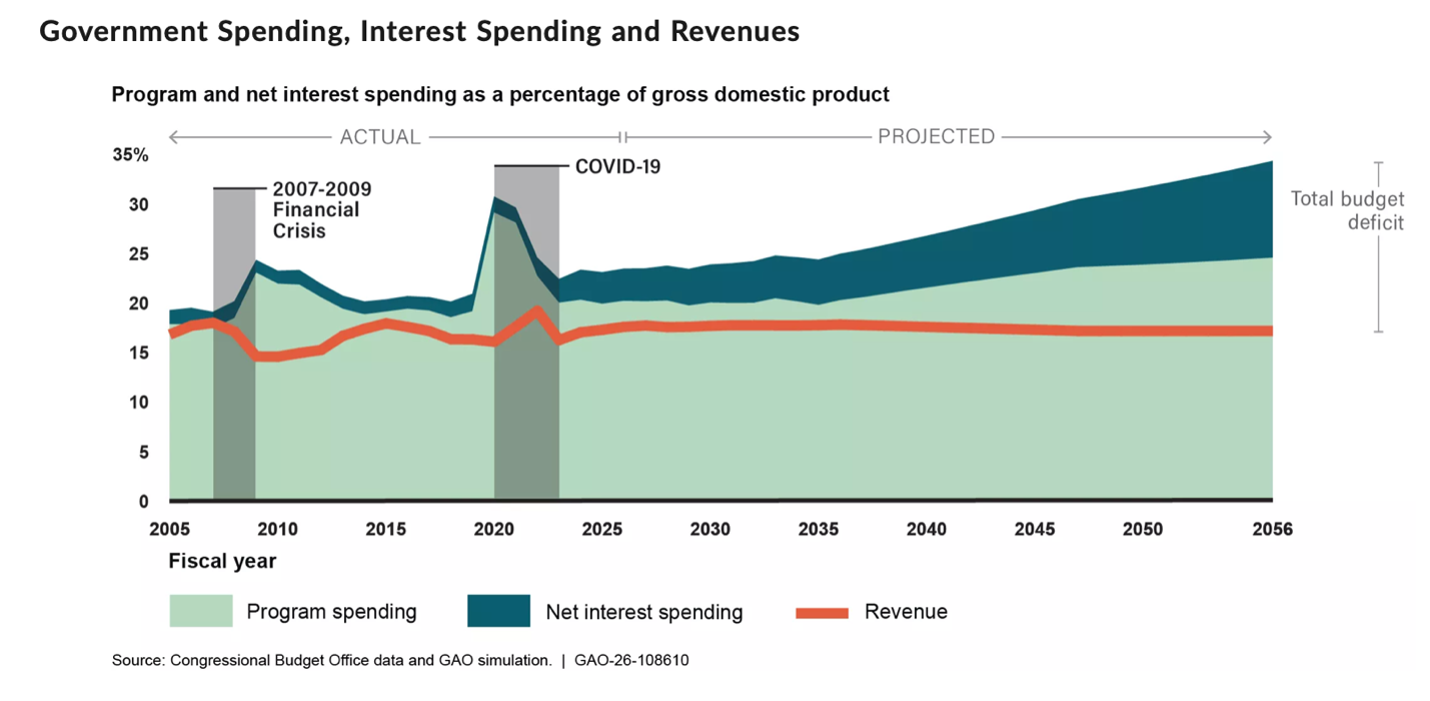
The US Government continues to spend and increase debt in good economic times rather than being fiscally responsible…
Rising interest rates are adding to the US government’s total debt balance since politicians continue to deficit spend…
With debt held by the public (investors) at 100% of GDP, any drop in investor confidence in the US would be problematic…the projections only get worse as we will be at 120% by 2036…
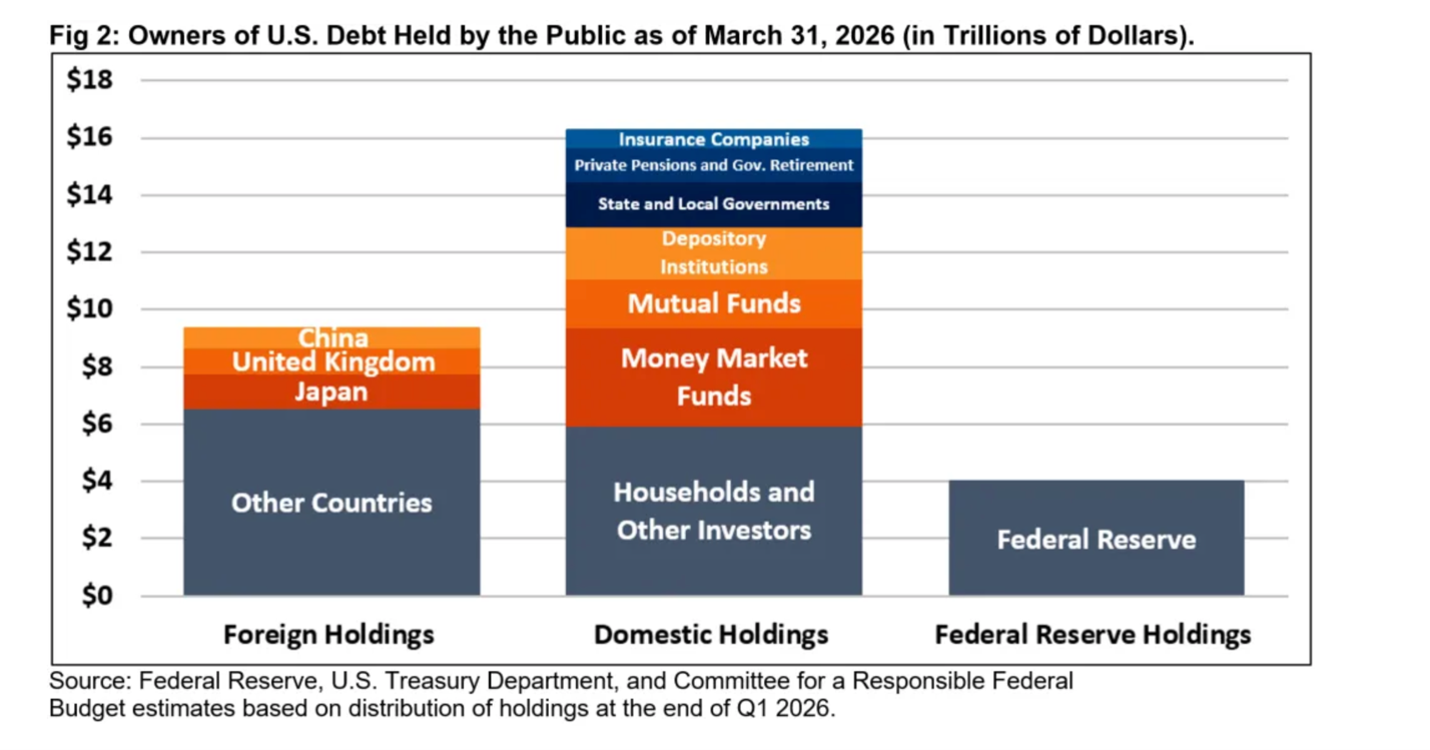
Foreign holders own 32% of US debt and any loss of confidence from this critical group will cause them to sell US Treasury debt, leading to higher interest rates and a falling US dollar…this is one of the most important risks at this time for the US capital markets…
As I highlighted in my June strategy piece, our equity positioning remains focused on: high quality companies, dividend payors, dividend growers and growth companies with reasonable valuations as we see risk of a valuation correction in a market led by high expectation/high momentum stocks. This argues for a rotation to our stocks as the market broadens. This rotation would be in jeopardy if the Bond Market Vigilantes demand higher interest rates and curtail credit to the US government. This bearish rise in market long term rates and credit crunch would ripple through to the corporate and consumer credit markets and cause corporate and consumer spending to decline, leading to a decline in corporate profits growth and equity valuations across the board. GDP growth will slow but not become negative, so there should not be a recession.
Will Trump capitulate to the Bond Market Vigilantes as he did when US bond rates spiked as the deadline for implementation of his reciprocal tariffs approached. Is Trump capable of doing a Bill Clinton, who capitulated to the Bond Market Vigilantes and implemented fiscally sound policies that led to budget surpluses and a reduction in US debt? Even if Trump capitulates, there are still a lot of negative issues hanging over the markets: no end to the Iran War, high energy prices depressing consumer spending, AI data center build out financed by debt raising borrowing costs, and forced selling of highly leveraged AI hedge funds like Situational Awareness & retail investors using triple leveraged ETFs in semiconductor stocks.
As no one knows what Trump will do, but we need to be prepared for the prospects of rising rates and a credit crunch. Here is a list of moves to get through the potential rise in expected volatility in the capital markets:
Deleverage and pay down debt, especially variable rate debt like credit cards.
Keep at least one year of expenses in high quality short term reserves.
Fund for any large future expenses now (weddings or home purchases).
Like late 2021, we are taking profits on 100% equity accounts and keeping a cash reserves of 15% to 20%. This can go higher if the client wants to sleep better.
Our Investment Committee is exploring the possibility of buying high quality non-dollar denominated short term debt and gold as these assets would add diversification.
As always, please don’t hesitate to reach out to us.
John Lui
Chief Investment Strategist
Disclosure
Chatham Wealth Management is registered as an investment adviser with the SEC. SEC registration does not constitute an endorsement of the firm by the Commission, nor does it indicate that the adviser has attained a particular level of skill or ability.
Past performance may not be indicative of future results. All investment strategies have the potential for profit or loss. Different types of investments involve varying degrees of risk, and there can be no assurance that any specific investment or strategy will be profitable for a client's portfolio.